
Space, defence, and aerospace programs are inherently complex. They combine hardware, software, operations, safety, security, and regulatory constraints, often across multiple teams, suppliers, and countries. The challenge is not just building advanced technology — it is making sure everything works together, reliably, the first time.
This is where systems engineering, and more specifically Model-Based Systems Engineering (MBSE), becomes essential. Choosing the right MBSE approach early significantly reduces late-stage surprises, integration issues, and delivery risk.
This article explains the role of systems engineering in complex programs, walks through how the ARCADIA MBSE approach addresses core systems principles, and clarifies where it fits within the broader MBSE landscape.
Systems Engineering Is Not Optional for Complex Programs
For simple products, informal processes may work. For complex, mission-critical systems, they do not.
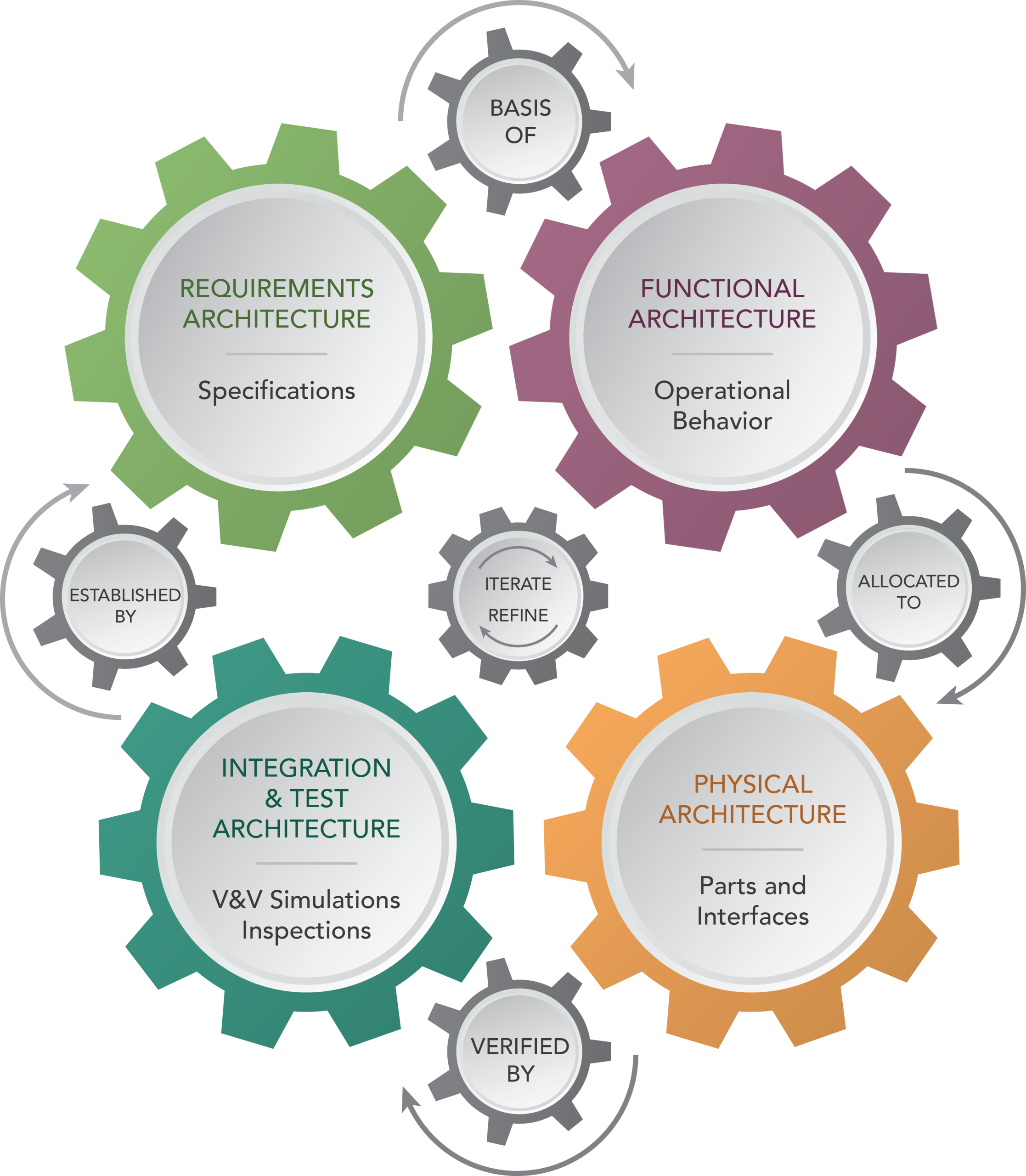
Systems engineering processes provide the structure needed to manage complexity by capturing requirements and systematically decomposing the system layer by layer until it reaches a stage where each component can be built internally, sourced through external contracts, or procured as a product.
A systems engineering process typically captures:
- Users and stakeholders
- Operational missions and environments
- Mission objectives
- Product life-cycle stages
- Operational behavior and functional decomposition
- Functional and non-functional requirements
- Logical hierarchy and decomposition
- Interface definition
- Physical hierarchy and decomposition
- Verification and validation planning
Without a disciplined systems engineering process, complex systems cannot be effectively designed or delivered. MBSE provides the structure needed to manage complex products and operational systems at scale. Teams that do not invest time in MBSE often discover problems later — during development, integration, qualification, or certification — when fixes are expensive and schedules are already under pressure.
The Core Idea Behind Systems Engineering
At its heart, systems engineering is about delaying implementation decisions until the system is properly understood.
Before committing to hardware or software solutions, teams must first define and validate:
- The mission and operational context
- User and system requirements
- Expected behaviors
- System boundaries and interfaces
- Constraints such as safety, reliability, performance, and security
For complex systems, this is not a linear flow, but an iterative process where each stage decomposes further to improve understanding and reduce uncertainty.
This upfront thinking reduces rework and prevents teams from optimizing individual components at the expense of the overall system.
Traceability: The Backbone of Quality in Complex Systems
In space and defence programs, systems are built by many teams with different expertise, sometimes spread across multiple locations and often over long timelines. Assumptions change, people rotate, and suppliers evolve.
Traceability is what holds everything together.
Traceability starts at operational analysis, flows into requirements, and continues through architecture, design, implementation, and verification. It connects what the system must do to how it is built and how it is tested.
Most importantly, traceability provides proof.
Proof that every requirement has been implemented.
Proof that every requirement has been verified.
In mission-critical systems, products cannot be left to chance. Traceability is the only reliable way to demonstrate that the system will work as intended. That proof is essential for certification, audits, and mission assurance.
Logical Architecture Comes Before Physical Architecture
One of the most common mistakes in complex programs is committing to physical solutions too early.
By first defining the logical architecture — functions, behaviors, data flows, and interfaces — and decomposing logical components into manageable elements, teams gain clarity without constraining design options. This enables:
- Better studies
- More informed supplier selection
- Optimized physical implementations
Mapping logical architecture to physical architecture later in the design cycle significantly reduces cost and risk because decisions are based on validated understanding and confirmed requirements rather than assumptions.
Interfaces Enable Parallel Development
Systems engineering decomposes large systems into smaller components that must work together through well-defined interfaces. Interface definition is therefore a natural outcome of disciplined systems engineering.
Clear and well-defined interfaces allow different teams and suppliers to work independently while still ensuring their components integrate correctly. This is critical in large space and defence programs where multiple organizations must deliver parts of the system in parallel.
When interfaces are poorly defined, integration becomes unpredictable. When interfaces are clear and validated, integration becomes routine.
How ARCADIA Applies These Principles
ARCADIA is one example of a structured MBSE approach that aligns well with the principles discussed above. It provides a clear progression from understanding the mission to defining deliverable system elements.
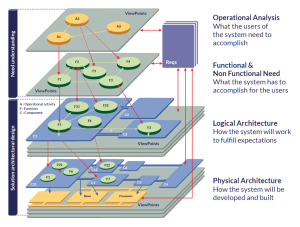
ARCADIA typically progresses through the following stages:
- Operational Analysis
This phase focuses on understanding the mission, stakeholders, operational scenarios, and external interactions. The goal is to capture what the system must achieve, independent of how it will be built.
- System Analysis
System requirements and high-level behaviors are defined. The system is treated as a black box, focusing on functions, constraints, and interactions with its environment.
- Logical Architecture
The system is decomposed into logical components and functions. Interfaces, data flows, and behaviors are clearly defined without committing to specific physical implementations.
- Physical Architecture
Logical elements are mapped to real-world hardware and software components. At this stage, trade-offs can be made with confidence because requirements and interfaces are already clear.
- EPBS (End Product Breakdown Structure)
The system is broken down into deliverable products and components that align with development, integration, verification, and delivery activities.
Through this structured flow, ARCADIA naturally supports traceability, interface definition, and delivery risk reduction across the system lifecycle.
ARCADIA Is Not the Only MBSE Approach
ARCADIA is not the only MBSE process in use.
Other well-established systems engineering frameworks include (see references for details):
- NASA systems engineering processes
- U.S. Department of Defense systems engineering approaches
- ISO/IEC 15288-based lifecycle models
- Industry-specific adaptations used across aerospace and defence
While terminology and structure differ, these frameworks share common systems engineering principles. What matters is not the specific framework chosen, but how rigorously those principles are applied.
Frequently Asked Questions
- How important is systems engineering for space and defence programs?
It is essential. Without it, complexity leads to late rework, integration failures, and certification risk.
- What is the core idea behind systems engineering?
Understand and validate the mission, context, requirements, and behavior, and delay committing to implementation until understanding is complete.
- When should systems engineering start?
At the very beginning, during mission definition and requirements capture.
- Why is traceability a must in complex systems?
Because it is the only way to prove the system will work as intended. In space and defence, products cannot be left to chance. Traceability provides evidence that all requirements have been implemented and verified.
- Where does traceability start in the systems engineering process?
At operational analysis, and it continues through requirements, architecture, design, implementation, and verification.
- Why define logical architecture before physical architecture?
It reduces risk by completing logical design that meets requirements, enabling optimized physical solutions based on validated understanding.
- When should system decomposition stop?
When components are well defined, interfaces are stable, and further decomposition no longer reduces delivery risk.
Closing Thoughts
Complex systems fail not because teams lack talent, but because complexity is underestimated or managed too late. A disciplined systems engineering approach, supported by MBSE, provides the structure needed to deliver predictably.
Whether using ARCADIA or another MBSE framework, the goal remains the same: reduce uncertainty early, enable collaboration, and prove that the system will work before it ever flies.
References
ARCADIA / Capella
https://mbse-capella.org/
ISO/IEC 15288 – System Life Cycle Processes
https://en.wikipedia.org/wiki/ISO/IEC_15288
https://www.iso.org/standard/63711.html
NASA Systems Engineering
https://www.nasa.gov/reference/2-0-fundamentals-of-systems-engineering/
https://www.nasa.gov/wp-content/uploads/2018/09/nasa_systems_engineering_handbook_0.pdf
U.S. Department of Defense Systems Engineering
https://www.cto.mil/wp-content/uploads/2023/06/Eng-Def-Sys-2022.pdf